The Joint Design Studio Indonesia–Japan 2011 brought together Indonesian and Japanese architecture students and researchers to explore the public space network of Kampung Cikini Ampiun, Focusing on spatial, ecological, and cultural quality, the workshop investigated how urban kampungs can inform more sustainable and socially resilient megacity futures. Through interdisciplinary fieldwork and design proposals, participants developed architectural interventions as part of the RIHN research on future megacity scenarios for 2050.
This community engagement brought together students from Universitas Indonesia and Chiba University to co-design and build a temporary bamboo swing installation in Kampung Cikini. Developed collaboratively with the local community, the installation symbolized participatory urban intervention in response to redevelopment pressures and social challenges. It also served as a statement addressing local concerns over water quality, waste management, and the preservation of community identity.
JKTWS 2013 combined speculative design research with hands-on community engagement in Kampung Cikini. Participants explored future megacity scenarios for 2050 while also designing and completing the façade of the Rumah Pintar (Children’s Library) using local materials and self-build techniques. The workshop connected long-term urban visions with practical interventions that supported community needs and adaptable housing.
This book reported the process of small part of the work achieved in 2013 toward the compilation of the “Megacity Micro-design Catalog” as part of Research Project “Megacity and Global Environment” 2010-2016
The book “Kisah Merumah” or “Housing Stories” is a compilation of essay and short stories that written in straightforward but meaningful process. As a joint work, the “HOUSING STORIES” invites us to understand and strengthen the bond between intimate action and “HOME” within and beyond the limits.
The Pandemik RA book is a collection of academic works that contributes to shaping the agenda and framework for urban agrarian reform. It serves as an initial step in the political struggle to recognize urban poor communities as an essential and inseparable part of urban development and growth.
Buku Putih documents a reflective exploration of the policies, regulations, and institutional frameworks surrounding agrarian reform. It formulates a roadmap for advancing programs that strengthen land rights and housing security. The publication aims to support more coordinated and effective implementation of urban agrarian reform initiatives.
Warung Komunitas explores the aspirations of youth in Pondok Cina, Depok, to inform community development programs that better reflect their needs. Developed through the MBKM program Social Architecture and Neighborhood for The Urban Youth (SANTUY), the booklet highlights participatory engagement with local young people. The project was created in collaboration with PUPLA PROJECT to support more inclusive, youth-centered neighborhood development.
This publication examines the concept of communal family housing as an alternative urban housing model. It explores issues of homeownership and identifies housing typologies that are most suitable for Generation Y and Generation Z in urban areas. The work contributes to discussions on more accessible and adaptable housing solutions for younger generations.
The MCK Kobak project rehabilitated a damaged communal sanitation facility in Kampung Cikini, combining public bathing facilities on the ground floor with a flexible community space above. The design responded to local socio-cultural practices by maximizing spatial efficiency while accommodating shared use and gender separation where needed. The adaptable upper floor supports a range of community activities, including religious gatherings, meetings, and temporary accommodation for visitors.
The Indonesia–Japan Students Joint Studio Workshop 2014 expanded the concept of void as a strategy for improving housing and public space in Kampung Cikini. Building on the previous year’s project, students developed practical, buildable interventions that responded to the realities of systemic poverty and community needs. The workshop emphasized implementable design solutions that could create meaningful spatial and social improvements.
JKTWS 2015 focused on improving the water ecosystem in Kampung Cikini, addressing critical challenges in water supply, sanitation, and drainage within the informal settlement. Students developed practical, adaptable design proposals for three key sites, emphasizing community-driven solutions that responded to local environmental and spatial conditions. The workshop highlighted how small-scale water infrastructure interventions could strengthen public health, environmental quality, and everyday community life.
JKTWS 2016 explored the emerging interface between Kampung Cikini and the Ciliwung River restoration project, focusing on the new boundary between formal infrastructure and informal settlements. Students developed design interventions that responded to this changing urban condition while examining themes of formal–informal, borders, and community life. The proposals were integrated with a community wedding celebration, demonstrating how public space can strengthen social interaction amid urban transformation.
JKTWS 2017 explored future scenarios for Kampung Cikini at both the urban and neighborhood scales, building on the internationally recognized “Kampung Cikini Beyond Boundaries” exhibition at the Seoul Biennale 2017. Students developed macro-scale visions while implementing six small-scale bricolage interventions along Ampiun Alley using locally available materials. Working closely with residents, the workshop demonstrated how collaborative, resourceful design can strengthen public space and community identity.
JKTWS 2018 transformed Kampung Cikini into a venue for a Japanese–Indonesian wedding celebration that engaged the entire community. Students designed four site-specific installations and performances along the wedding procession, culminating in a traditional Betawi palang pintu ceremony. The workshop showcased how cultural events and participatory design can activate public space, strengthen community identity, and reveal Kampung Cikini’s potential as a destination for community-based cultural activities.
JKTWS 2019 explored the theme “The Trading City – Trading Spaces in an Informal Settlement,” examining how shared and exchanged spaces, rather than economic transactions, support everyday life in Kampung Cikini. Students investigated existing patterns of spatial sharing and proposed new forms of space trading to improve living conditions within the constraints of a dense urban environment. The workshop highlighted the value of collaborative and adaptive use of space as a strategy for more livable informal settlements.
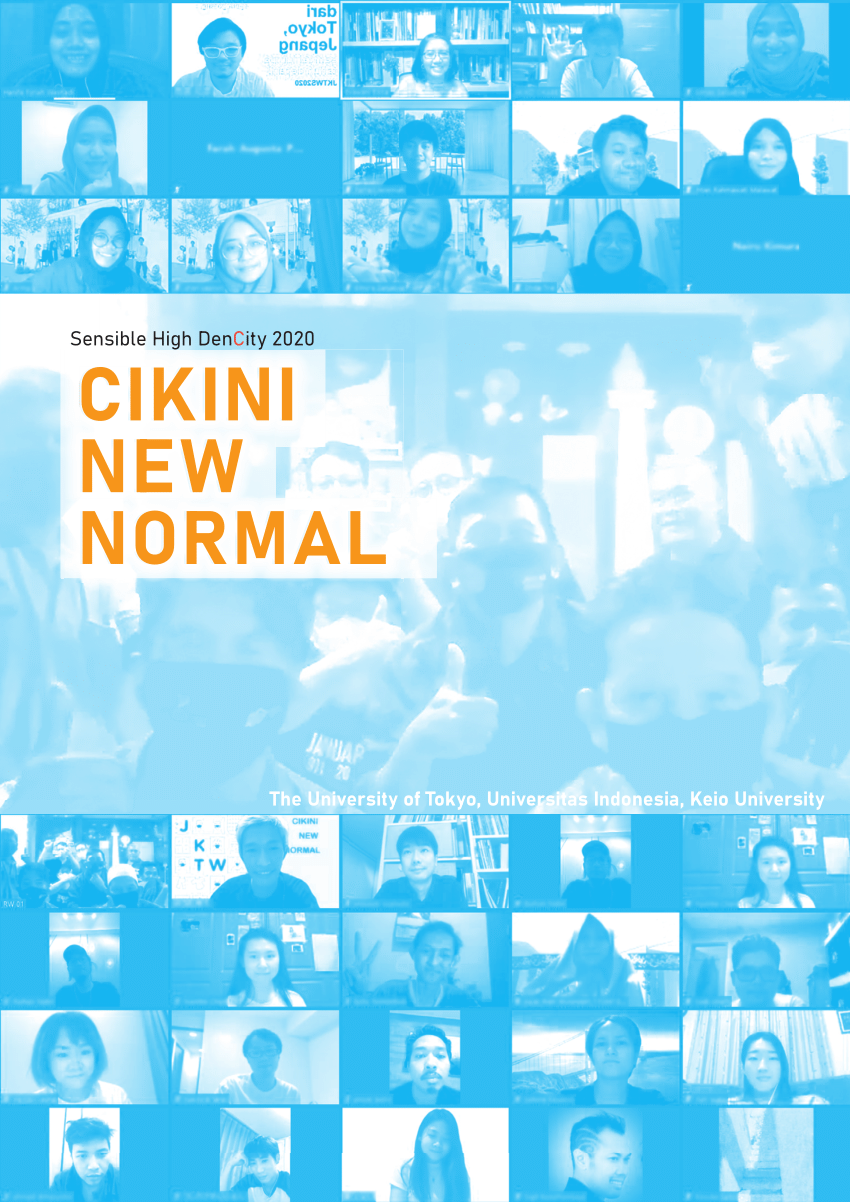
JKTWS 2020 was held fully online, focusing on how Kampung Cikini could adapt to the challenges of the COVID-19 pandemic and the new normal. Students developed district-scale plans and designed community centers (Balai RW) that supported resilient communal life under changing public health conditions. The workshop concluded with virtual presentations and discussions with local residents, demonstrating the potential of international online collaboration in community-based design.
This academic paper examines Kampung Muara Angke as a case study for advancing urban agrarian reform in Jakarta. It provides academic analysis of the settlement’s physical and legal conditions to support more equitable land tenure, land use, and access. The publication contributes evidence-based recommendations for implementing asset and access restructuring within Indonesia’s agrarian reform framework.
This academic paper investigates Kampung Muka, Kampung Marlina, Kampung Elektro, and Kampung Gedong Pompa to support the implementation of urban agrarian reform in Jakarta. It analyzes the physical and legal conditions of these settlements to inform more equitable land tenure, land use, and access. The publication provides an evidence-based foundation for strengthening asset and access restructuring within Indonesia’s agrarian reform framework.
This academic paper examines the impacts of Jakarta’s rapid urbanization and gentrification on informal urban settlements. It proposes policy options to protect kampung communities facing insecure land tenure and displacement. The publication provides a framework to guide the implementation of urban agrarian reform and strengthen tenure security for vulnerable residents.