
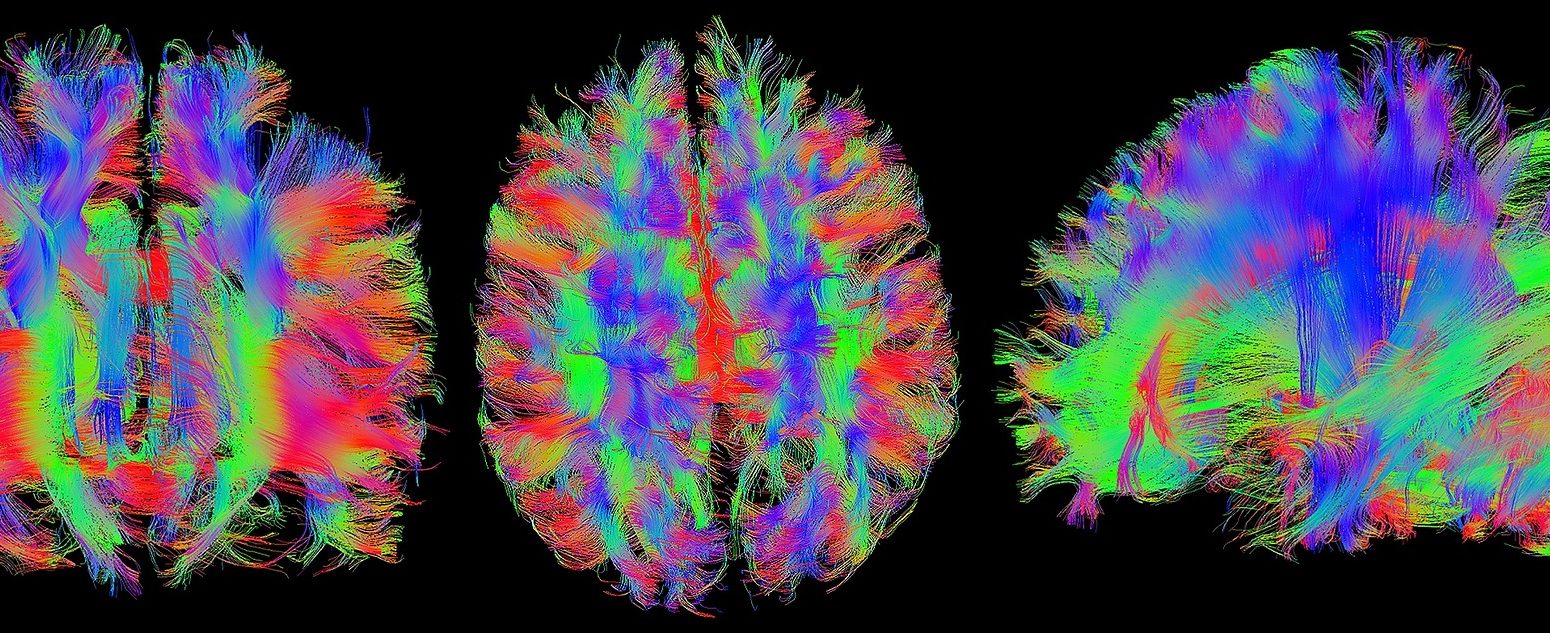
Diffusion tensor imaging (DTI) metrics provide insights into neural pathways, which can be pivotal in differentiating congenital and acquired hearing loss to support diagnosis, especially for those diagnosed late. In this study, we analyzed DTI parameters and developed machine learning to classify these two patient groups. The study included 29 patients with congenital hearing loss and 6 with acquired hearing loss. DTI scans were performed to obtain metrics, such as fractional anisotropy (FA), axial diffusivity (AD), radial diffusivity (RD), and mean diffusivity (MD). Statistical analyses based on p-values highlighted the cortical auditory system’s prominence in differentiating between groups, with FA and RD emerging as pivotal metrics. Three machine learning models were trained to classify hearing loss types for each of five dataset scenarios. Random forest (RF) trained on a dataset consisting of significant features demonstrated superior performance, achieving a specificity of 87.12% and F1 score of 96.88%. This finding highlights the critical role of DTI metrics in the classification of hearing loss. The experimental results also emphasized the critical role of FA in distinguishing between the two types of hearing loss, underscoring its potential clinical utility. DTI parameters, combined with machine learning, can effectively distinguish between congenital and acquired hearing loss, offering a robust tool for clinical diagnosis and treatment planning. Further research with larger and balanced cohorts is warranted to validate these findings.
Read the full publication: https://doi.org/10.3390/computers14080303