The latest publication from Mental Health and Psychiatric Nursing Research Cluster member Prof. Herni Susanti is now available in PLoS One. The article, “Water, sanitation, and depressive symptoms in Indonesia: The mediating role of life satisfaction,” is co-authored with Mashita Fajri, Sri Idaiani, Amy Blakemore, Jonathan Gibson, Helen Brooks, Penny Bee, and Asri Maharani.
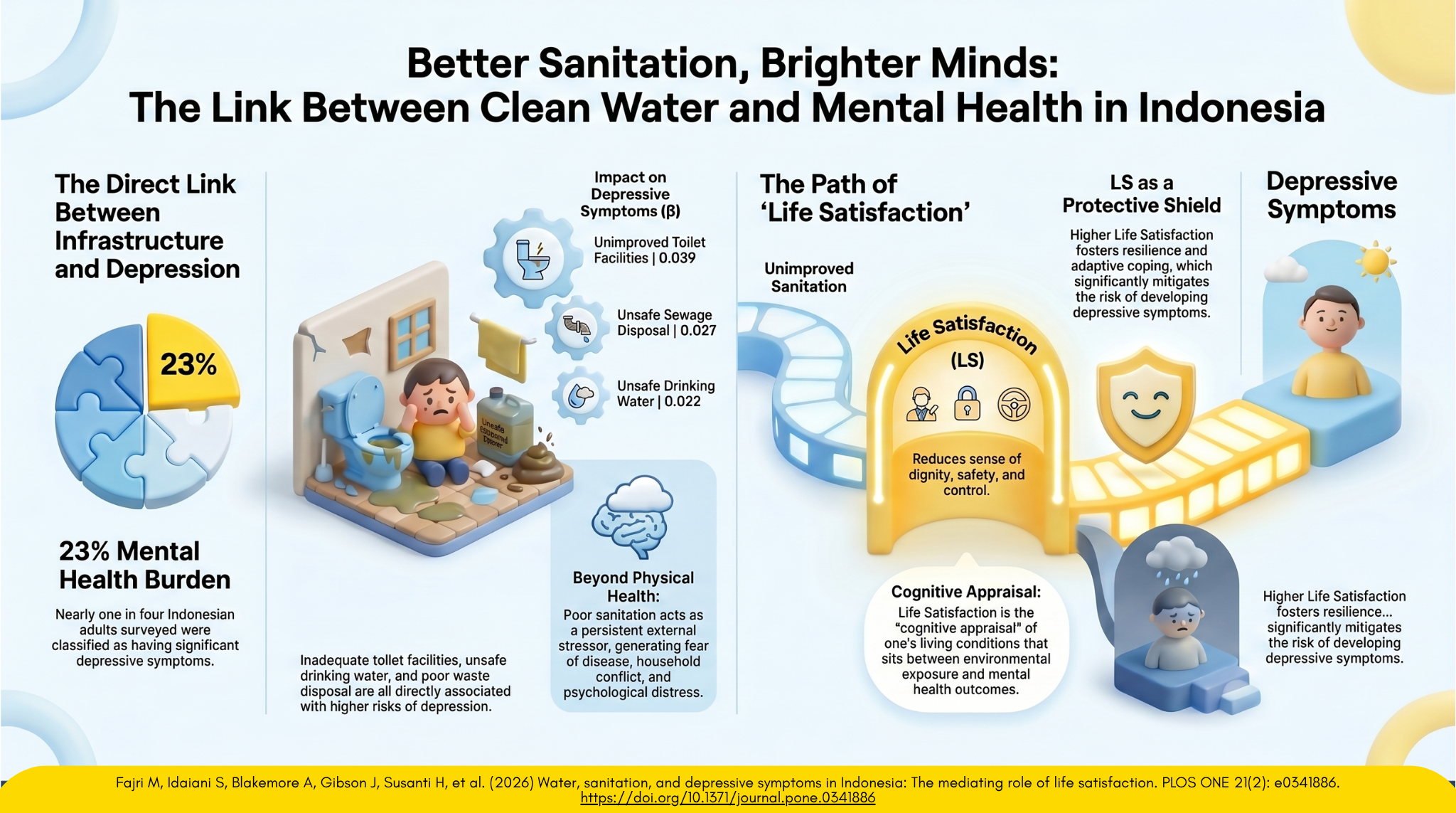
This study examines the connections between sanitation conditions and depressive symptoms among Indonesian adults while evaluating the mediating role of life satisfaction. Utilizing data from 31,446 participants in the Indonesian Family Life Survey (IFLS-5), the research team applied structural equation modelling to assess five sanitation indicators: drinking water, water sources, toilet facilities, sewage disposal, and waste disposal methods.
Findings confirm that inadequate access to safe water, unimproved sanitation facilities, and improper waste management are directly associated with higher odds of depressive symptoms. The analysis demonstrates that life satisfaction partially mediates this relationship. Unimproved sanitation contributes to lower life satisfaction, which subsequently exacerbates depressive symptoms.
These results indicate the necessity of integrating water and sanitation infrastructure improvements into national mental health and public health policies. Expanding access to safe drinking water and sanitation serves as a cost-effective strategy to generate substantial mental health benefits and economic returns, particularly in underserved rural areas.