STELLAR (Stem cEll rEsoURces for Advanced-biomedicine Research) is a national stem cell research consortium that integrates multidisciplinary expertise to advance stem cell science, translational biomedicine, and innovative health technologies in Indonesia.
STELLAR functions as a Stem Cell Scholar Hub, bringing together clinician-scientists, basic researchers, engineers, and translational experts from academic institutions, national research centers, and industry partners. Through this collaborative platform, STELLAR aims to generate impactful scientific knowledge, develop advanced stem cell–based resources, and accelerate translation toward clinical and societal benefit.
Rather than operating as a single laboratory, STELLAR serves as an integrated research ecosystem, aligning diverse research strengths, shared infrastructure, and coordinated research roadmaps to strengthen Indonesia’s capacity in advanced biomedicine and regenerative research.
Liver transplantation remains the definitive therapy for patients with end-stage liver disease (ESLD). However, the scarcity of donor organs, high costs, and long waiting times necessitate alternative therapeutic strategies. Bioartificial liver (BAL) systems have emerged as a promising bridge therapy to support liver function while awaiting transplantation or spontaneous recovery.
BAL systems require both cellular and non-cellular components that can be engineered to replicate native liver structure and function. Liver organoids—three-dimensional in vitro reconstructions of hepatic tissue—recapitulate key aspects of liver microarchitecture, cellular heterogeneity, and metabolic activity, making them suitable candidates for BAL development and disease modeling.
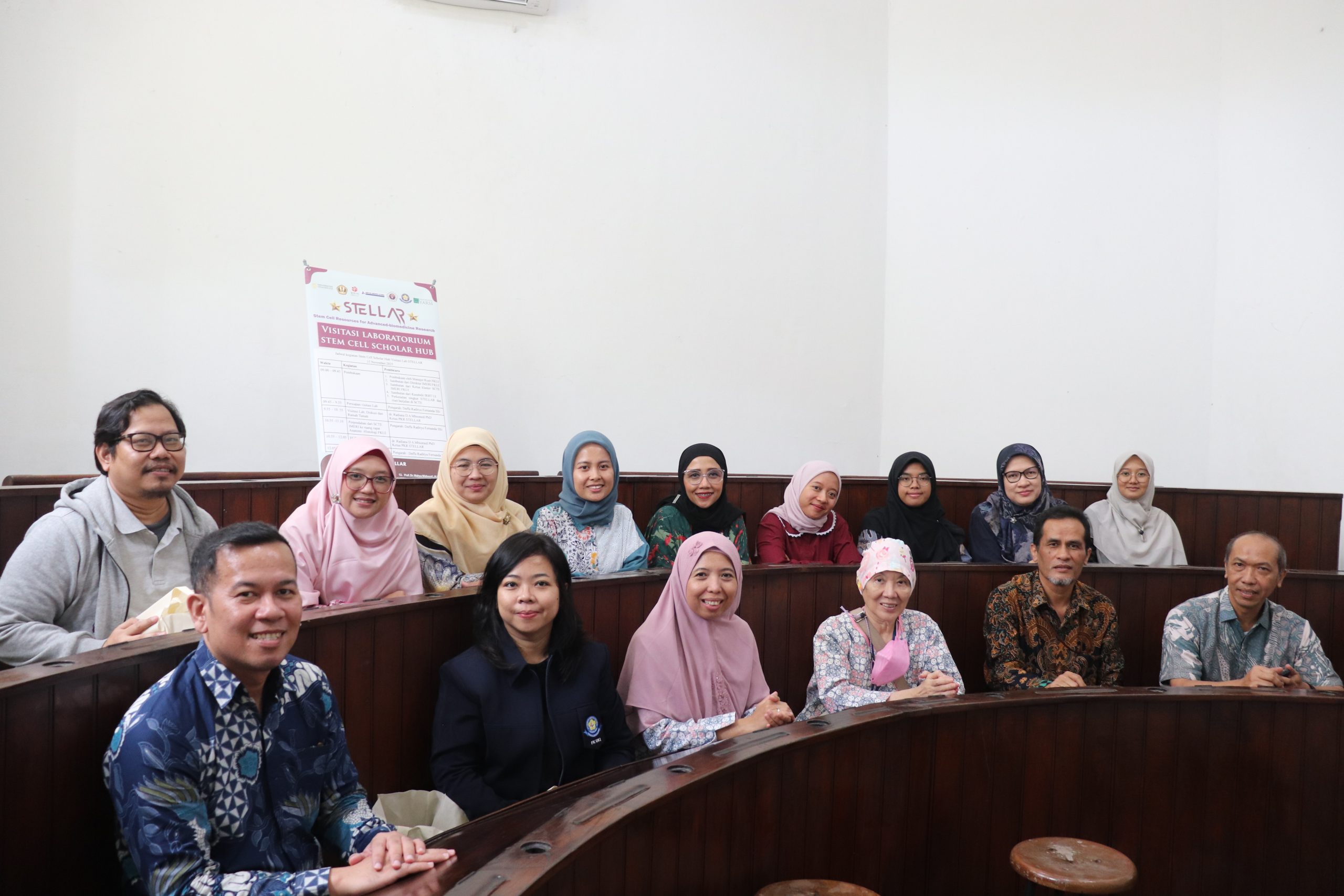
At the Faculty of Medicine, Universitas Indonesia (FKUI), foundational work has been conducted to develop four cellular components of liver organoids, integrating hepatocytes, endothelial lineage cells, and supporting stromal elements. In parallel, non-cellular components were developed through SHiNTA, a decellularized native liver scaffold produced using a simple multiple-site syringe injection technique. This approach preserves the extracellular matrix (ECM) architecture essential for cell attachment, signaling, and tissue maturation.
Preclinical in vivo transplantation studies using bile duct–ligated rabbit models demonstrated integration of xenotransplanted liver organoids into the omentum tissue, accompanied by identifiable host immune responses. These findings provided critical insight into organoid engraftment dynamics, immune interaction, and translational challenges. Furthermore, liver organoids were successfully tested under dynamic conditions using perfusion bioreactor systems, enabling controlled nutrient delivery and mechanical stimulation at defined perfusion rates.
Building upon these results, ongoing research within STELLAR seeks to further elucidate cell–cell interactions within liver organoids, particularly the putative mechanisms by which endothelial progenitor cells differentiate into functional endothelial cells, driving angiogenesis and vascularization within three-dimensional organoid constructs. These studies form the scientific basis for advancing organoid maturation, scalability, and translational relevance.
Parallel to advances in regenerative modeling, cellular immunotherapy has emerged as a transformative approach in cancer treatment. The tumor microenvironment (TME) plays a critical role in cancer progression, metastasis, and therapeutic resistance. It consists of complex interactions between cancer cells, stromal cells, immune populations, and acellular components such as ECM and extracellular vesicles.
Among immune effector cells, natural killer (NK) cells are key players in innate immune surveillance and tumor elimination. However, cancer cells can induce NK cell dysfunction and apoptosis through immune checkpoint pathways such as FasL/Fas and PD-L1/PD-1, leading to immune exhaustion and reduced antitumor efficacy.
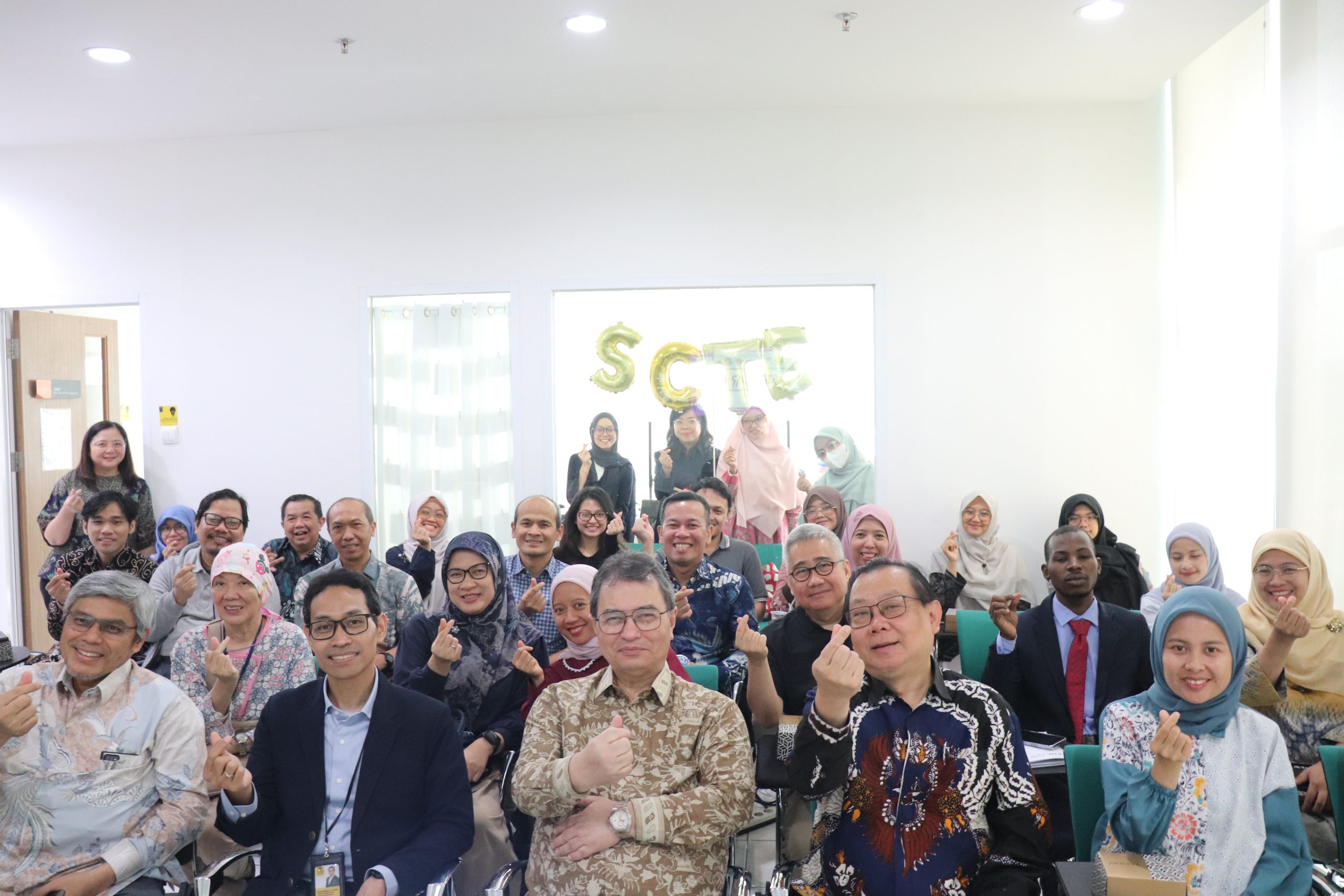
NK cells originate from hematopoietic stem cells (HSCs), and their in vitro differentiation requires optimized protocols that promote terminal maturation. Research conducted within FKUI and SCTE IMERI demonstrated that feeder-free NK cell differentiation protocols using IL-2, combined with cultured HSCs, yielded a higher proportion of fully mature (stage 5) NK cells compared to freshly isolated HSCs. These findings highlight the importance of intrinsic cellular regulators—including reactive oxygen species (ROS) and microRNAs—in promoting NK cell maturation.
Despite successful differentiation, NK cell functionality is often compromised within the TME. Increasing evidence indicates that acellular components—particularly extracellular matrix (ECM) proteins and extracellular vesicles (EVs)—play a crucial role in regulating NK cell fate, signaling, and exhaustion.
Exosomes, the smallest subtype of EVs (30–150 nm), carry bioactive molecules including growth factors, cytokines, proteolytic enzymes, and regulatory RNAs. Studies within the SCTE IMERI research cluster investigated cancer-derived exosomes and ECM components as modulators of NK cell activity. Decellularized ovarian cancer niche scaffolds were developed and characterized, followed by cytotoxicity assays against ovarian cancer cell lines to evaluate ECM-mediated signaling effects.
Further experimental work demonstrated the potential of healthy donor–derived exosomes to restore functional capacity of NK cells isolated from hepatocellular carcinoma patients. Complementary methodological studies also explored simplified histological staining techniques for visualizing exosome endocytosis in NK cells, providing accessible alternatives to immunofluorescence-based approaches.
These studies were conducted within the SCTE IMERI exoiNK research roadmap, forming a structured pathway toward translational immunotherapy development.
In alignment with translational requirements, STELLAR emphasizes the need for robust preclinical in vivo data prior to clinical trials. Ongoing and future studies include safety evaluation, toxicity assessment, dose optimization, and efficacy testing of exosome-induced NK cell therapies in relevant cancer animal models.
Comparative studies are also planned to evaluate the effectiveness of exosome-induced NK cells against CAR-T and CAR-NK cell therapies, developed through international collaboration with the University of Otago (Prof. Alex McLellan Laboratory). This comparative framework enables objective benchmarking of novel immunotherapeutic strategies.
Collectively, these research efforts—spanning iPSC-based liver organoids, bioartificial liver systems, tumor microenvironment studies, and cellular immunotherapy—demonstrated the necessity of an integrated, multidisciplinary, and scalable research framework. STELLAR was established to unify these foundational scientific strengths into a national consortium, enabling deeper mechanistic studies, technological innovation, and accelerated translation from bench to clinic.
Through STELLAR, these scientific foundations are expanded into broader research pillars, shared infrastructures, and collaborative platforms that support Indonesia’s long-term capacity in advanced biomedicine.
STELLAR brings together a multidisciplinary network of academic, research, and applied biomedical institutions, including:
Through this network, STELLAR facilitates joint research programs, collaborative grant applications, co-supervision of postgraduate students, shared research infrastructure, scientific dissemination, and intellectual property development.