RISE-C

Resilience, Intelligence, Security, Excellence Center

About Us

Center for Resilience, Security, and Intelligence Studies for Future Strategy

The Resilience, Security, and Intelligence Research Cluster is a center for the study of resilience, vulnerability, and intelligence at various levels (micro, meso, and macro), ranging from the individual, family, community, regional, national, and international.

We not only examine dynamics at these levels but also develop theories and strategies in various strategic areas, such as economics, social, political, cultural, organizational, digital technology, communications, international relations, public policy, and the food, water, and energy sectors.

Through a resilience- and vulnerability-based approach, this research cluster produces non-traditional security strategies (human security), including vulnerability mitigation strategies analyzed based on the time phase of the event: before, during, and after the shock.

Threats focused on the study include climate change, transnational crime, economic crises, trade and currency wars, illegal migration, disinformation, cybercrime, energy and food crises, corruption, and digital disruption.

Not only oriented towards short-term solutions (resilience/vulnerability), we also develop a sustainability perspective as the foundation of a long-term human security strategy.

Jepang RISE-C

Our Vision

Contributing thought through a scientific process based on non-traditional security sciences (human security), resilience, vulnerability, and intelligence to all stakeholders, from the individual to the state or national level, and across various fields. It also addresses all issues that pose a threat or disruption to all levels of stakeholders, regardless of their occupation, agency, or region.
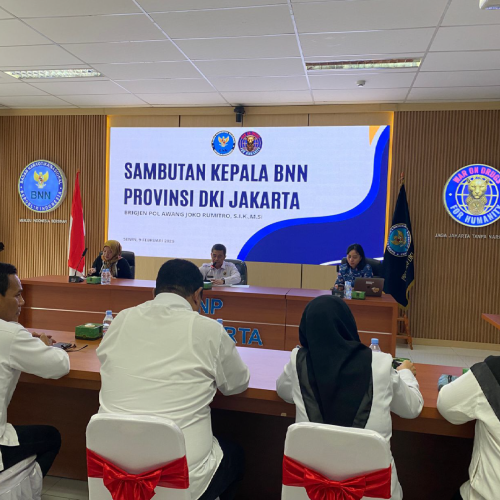
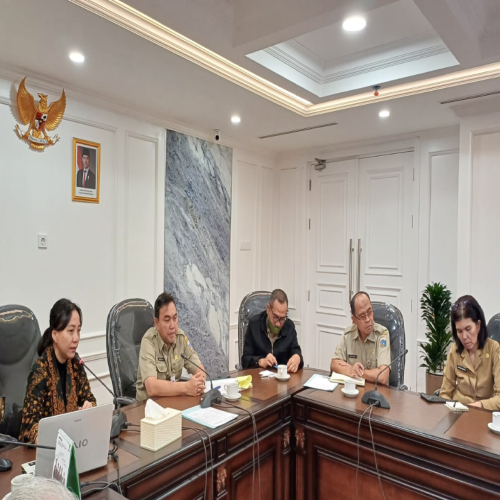
RISE-C bersama DKI 2

Our Mision

  • Reducing Uncertainty for decision makers
  • Survive, Adapt, Absorb, Recovery and Transformation
  • Response Speed ​​and Getting Back on Your Feet After a Disruption
  • Early Warning/Early Detection, Scenario Planning
  • Understanding the Adaptive Cycle of Every VUCA Occurrence
  • Strategy for the Sustainability of Life, Sovereignty and Security of the State, Society, Community, Household (business, family)
  • Social Inclusion, Gender Equality, Disability and Youth

Research Cluster Focus

Multi-Level Resilience, Vulnerability, and Intelligence

#Multi-Level Economic Resilience, #Sustainability & Sustainable Development, #Food & Energy Security, #Economic Intelligence, Food & Energy, #Resilience Policy Analysis, #Socio-Cultural & Communication Resilience, #International Relations, #National Resilience, #Security Studies, #Global Threats, #Geopolitics & Geostrategy National Security, #National Security Intelligence Counterintelligence, #Terrorism, #Traditional & Non-Traditional Security, #Cyber ​​Intelligence & Cyber ​​Resilience, #Collaborative Governance, #Public Policy

This focus examines resilience, vulnerability, and intelligence at various levels (micro, meso, and macro), starting from the individual, family, community, regional, national to international levels.

Gender, Youth, Disability and Social Inclusion (GEDSI)

#Feminist Anthropology, #Feminist Ethnography, #Feminist Political Ecology, #Gender & Forestry, #Gender & Natural Resources, #Gender & Environment, #Gender & Agrarian Affairs, #Gender & Food, #Gender & Renewable Energy, #Gender & Development, #GEDSI, #Gender Political Economy, #Labor Relations & Gender, #Gender in International Trade, #Feminist Research Methodology, #Feminist Interpretation of Religion, #Gender & Spirituality, #Gender & Education, #Islamic Family Law from a Gender Perspective, #Gender & Culture, #Gender & Extremism

This focus develops gender, youth, women, disability and social inclusion or Gender, Pemuda, Perempuan, Disabilitas, dan Inklusi Sosial(GEDSI)-based research in various development sectors.

Meet Our Researchers

Assoc. Prof. Dr. Palupi Lindiasari Samputra, S.Pi., M.M., CertDA

Head of Research Cluster

The Head of the RISE-C Research Cluster and a Lecturer in the Department of Strategic Resilience and Security Studies, he is active in studies of national resilience, economic resilience, food and energy security, and policy analysis. His work includes scientific research and collaborative projects in sustainable development and multidisciplinary resilience.

Expertise:

  • Multi-level economic resilience
  • Sustainability
  • Food & energy security
  • Sustainable development
  • Economic intelligence, food, energy
  • Resilience policy analysis
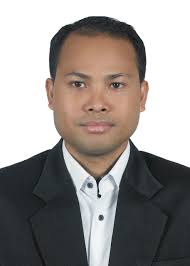
Dr Puspitasari

Dr. Puspitasari, S.Sos., M.Si., CertDA

Coordinator of the Socio-Cultural Resilience and Communication Sub-Cluster

Lecturer in the Department of Strategic Resilience and Security Studies, focusing on socio-cultural resilience and cross-level communication. Experienced in research and teaching on social issues and strategic communication.

Expertise:
  • Socio-cultural resilience
  • Strategy communication
  • Intercultural communication
  • Crisis communication
  • Media and propaganda issues.
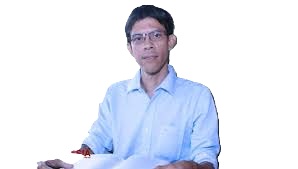
Muhammad Syaroni

Muhammad Syaroni Rofii, S.H.I., M.A., Ph.D

Coordinator of the International, Diplomacy, and Regional Resilience Sub-Cluster

Lecturer in the Department of Strategic, Resilience, and Security Studies, specializing in international relations, global threats, security studies, and national resilience. His profile reflects his contributions to the field of global strategic studies.

Expertise:
  • International resilience
  • International Relations
  • Global threat
  • Political science
  • Security study
  • National resilience
  • Policy analysis
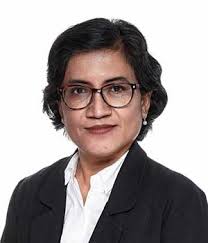
Stanislous Riyanta

Dr. Stanislaus Riyanta, S.Si., M.Si

Security Intelligence Sub-Cluster Coordinator (Traditional and Non-Traditional)

Lecturer in the Department of Strategic Resilience and Security Studies, researching national security intelligence, counterintelligence, terrorism, and collaborative approaches to threat mitigation. His scholarly publications include studies on counterintelligence, governance, and national security strategy.

Expertise:
  • National security intelligence
  • Counterintelligence and Terrorism
  • Collaborative governance
  • Public policy
  • National security
  • Traditional and non-traditional threats
  • Cyber ​​intelligence
  • Cyber ​​resilience
Mia Siscawati

Mia Siscawati, S.Hut., M.A., M.A., Ph.D

Research Cluster Researchers

Lecturer in the Department of Strategic Resilience and Security Studies, specializing in gender studies, environmental studies, feminist anthropology, and social inclusion issues in development. Her areas of expertise include the relationship between gender and natural resources, the environment, agrarian affairs, and renewable energy.

Expertise:

  • Feminist anthropology
  • Feminist ethnography
  • Feminist political ecology
  • Gender & forestry
  • Gender & natural resources
  • Gender & environment
  • Gender & agrarian
  • Gender & food
  • Gender & renewable energy
  • GEDSI
Dr Hariati

Dr. rer.polit. Hariati Sinaga, S.Sos., M.A

Research Cluster Researchers

An academic focusing on the political economy of labor and gender relations, including the implications of gender relations in trade and employment, particularly for female palm oil workers.

Expertise:

  • Political economy of labor relations & gender
  • Gender relations in trade
  • Female palm oil workers
Dr Iklilah

Dr. Iklilah Muzayyanah Dini Fajriyah, S.Th.I., M.Si

Research Cluster Researchers

Lecturer specializing in feminist research methodology and feminist religious interpretation, as well as gender issues in education, spirituality, Islamic family law, culture, and extremism.

Expertise:

  • Feminist research methodology
  • Feminist interpretation of religion
  • Gender & education
  • Gender & spirituality
  • Islamic family law from a gender perspective
  • Gender and culture
  • Gender & extremism

Our Roadmap

2025–2028
[Index Development] Micro, Meso, and Macro Level Resilience Index
The development of resilience indices at various levels (micro, meso, and macro) includes natural resource resilience (food, water, and energy) as well as non-resource resilience (economic, social, political, cultural, democratic, and international).
[Index Development] Traditional and Non-Traditional Security Indexes
The preparation and integration of traditional and non-traditional security indices as part of a larger framework for measuring national resilience and security based on multidimensionality.
2028–2030
[Index Strengthening] Development of Natural Resource and Non-Resource Threat Index
Continue developing threat indices in the natural resources (food, water, energy) and non-resources (economic, business, political, social, cultural, international, diplomacy) sectors, including traditional and non-traditional security.
[Risk Assessment Center] Human Security Risk Assessment Center
To become a center for human security risk assessment at various levels and multidimensionally (across sectors) as a reference for data-based strategic analysis.
2030–2033
[Command Center] Spatial Intelligence-Based Security and Resilience Monitoring Center
Establishment of a command center to map security conditions at the regional, local, and national levels through spatial analysis of resilience, security, and intelligence.
[Big Data & Realtime Monitoring] Multi-Source Realtime Data Integration
Integration of real-time weather data (BMKG), social media traffic data (Twitter/X), and commodity and secondary market price data to support early warning systems and data-based decision-making.

Collaborated with